MUSIC

Thursday, February 27, 2014

Literature Analysis #2

On Brave New World by Aldous Huxley.


  1. The novel starts in a hatchery, in a utopian London some hundred years in the future. In this novel, the whole world is united under a single world state. Breeding and creation of new humans is automated by in vitro fertilization-- everyone is essentially a test tube baby. Society is split into five castes: Alpha, Beta, Gamma, Delta, and Epsilon. The higher one is on the caste, the more physically and mentally developed they are. Lower caste members, such as Gammas, Deltas, and Epsilons do the most menial jobs that no one else wants to do but someone has to in order to keep society functioning.
    They are indoctrinated from a young age via a process called hypnopædia (or sleep learning) to be grateful that their in whatever caste they are among other things. In this society, recreational sex and being licentious  is encouraged; one is considered odd if they only have one partner. This is because of the motto of society: everyone belongs to everyone else. We are introduced to Lenina Crowne and Bernard Marx. Lenina is a worker at one of the hatcheries and Bernard is an Alpha plus psychologist. Bernard is somewhat of an outcast. His work with hypnopædia has led him to realize the deeply held beliefs are simply phrases repeated over and over to them as kids. While most everyone else has multiple partners, Bernard advocates only having one and treating women as actual human beings rather than pieces of meat. He is also short for an Alpha Plus. This, coupled with his radical beliefs, has lead many to believe that alcohol was placed in his blood surrogate as an embryo, which is a process by which they stunt the development of the lower caste members.
  2. The theme of the novel was the perils of a consumerist society & totalitarianism. In the utopian future in which Brave New World takes place, the world is under the control of a single world state. This world state operates a command economy, where the state is in full control of all land, labor, and capital and make all economic choices. This is often the economy seen in communist states. In order to support this economy, denizens of the world state are indoctrinated at a very young age. Some of the phrases drilled into their minds include "ending is better than mending" and "the more stitches the less riches". They are taught to consume. Huxley wasn't too far off in his prediction of the future. Much like in the novel, people in our contemporary society much rather trash the broken rather than fix it. Further proof of how consumerist it is can be found in the denizen's worship of Henry Ford as a god. Henry Ford, for those who don't know, was essentially the creator of the assembly line, a process which in turn created mass production. Mass production is used heavily in the novel as a form of creating new humans. The world state also controls most aspects of daily lives. Anyone who believes differently than the norm is seen as an outlier. 
  3. Huxley's tone in Brave New World is somewhat ironic and satirical. Everything from "Thank Ford" (a parody of "Thank God") to the way that their society frowns upon having one partner, as  opposed to our society. Even the names of the characters have a hint of the satirical tone. Bernard Marx's last name is a reference to Karl Marx (founder of communism). There's many more, such as Lenina Crowne to Vladimir Lenin (leader of the October revolution), Benito Hoover to Benito Mussolini (Italian Dictator), Polly Trotsky to Leon Trotsky (another leader of the October revolution), among others. 
  4. A) Imagery: Constantly throughout the novel, savages or lower caster members (even occasionally our main characters) are referred to as animals. In the first two chapters, every time the DHC would talk, the narrator would say "straight from the horses mouth". "Like aphides and ants, the leaf-green Gamma girls, the black Semi-Morons swarmed round the entrances, or stood in queues to take their places in the monorail tram-cars." Chapter four. It gives the feeling that denizens of the world state are much like a colony of ants or bees, with a central figurehead at the helm and the rest of society is born into pre-destined roles in life (workers, soldiers, other specialized groups). Much like insects, they are all mindless drones.
B) Symbol: Throughout the novel, zippers are referenced many times throughout the novel. In the novel, the zipper is a symbol of easy access, which in itself, is something that is central to society in the novel. In said society, one musn't wait until marriage before they have sex. It is highly encouraged that children get introduced into the world of sex at a young age.
C) Foil: One of the most evident foils in the book is that of the savage reservation compared to the rest of the "civilized" world state. In the savage reservation, having multiple partners is frowned upon, as opposed to the world state, where it is encouraged. Linda is ostracized and beaten by the women of the reservation. This foil is used to show the dichotomy between the two worlds and to make the reader ask themselves "who's truly civilized?"
D) Paradox: The situation that Bernard Marx is in is somewhat of a paradox. He is seen as an individual and an outcast cause he does not share the same beliefs as the rest of society. All this changes, however, when he brings John the savage back to London and gets thrown into essentially stardom. At that moment, Bernard essentially betrays his previous values and believes and has sex with multiple women and becomes good friends with Henry Foster, whom he once despised. Huxley did this to illustrate that most humans crave acceptance from the society and wouldn't mind compromising on a few of their beliefs just to have friends and be well liked.
E) Irony: The name of John the Savage itself is ironic. While at first glance it may not seem so (he was, after all, born in the savage reservation therefore is a savage), as we are more and more introduced to him as a character, we begin to realize that he may be the only civilized (by our standards) one in the novel. John is the only character in the novel to be actually born and have a compassionate relationship with his mother, while essentially everyone else was born in a test tube and doesn't even have a concept of a parent. While people in the civilized world take soma and have sex for hobbies, John the savage reads Shakespeare. He also denounces the morals and values of the civilized society, claiming stability isn't worth the sacrifice of personal freedom and individuality. 
F)
CHARACTERIZATION
  1. Direct: "For whatever the cause (and the current gossip about the alcohol in his blood-surrogate may very likely–for accidents will happen–have been true) Bernard's physique was hardly better than that of the average Gamma. He stood eight centimeters short of the standard Alpha height and was slender in proportion. Contact with members of he lower castes always reminded him painfully of this physical inadequacy." (Chapter Four).  "A very stout blonde squaw stepped across the threshold and stood looking at the strangers staring incredulously, her mouth open. Lenina noticed with disgust that two of the front teeth were missing. And the colour of the ones that remained … She shuddered. It was worse than the old man. So fat. And all the lines in her face, the flabbiness, the wrinkles. And the sagging cheeks, with those purplish blotches. And the red veins on her nose, the bloodshot eyes. And that neck–that neck; and the blanket she wore over her head–ragged and filthy. And under the brown sack-shaped tunic those enormous breasts, the bulge of the stomach, the hips." (Chapter 7). Indirect: (on Bernard Marx) "And then he spends most of his time by himself-alone". (chapter three); hints at how different Bernard Marx is. In this society, being alone is discouraged. 
  2. Huxley doesn't really change his diction nor tone throughout the novel. It is pretty consistent, satirical, and cold throughout.
  3. Bernard is quite the dynamic character. A dynamic character, by definition, grows throughout the course of the novel. In the beginning of the novel, Bernard is extremely introverted and really awkward. But once he returns from the savage reservation, he is filled with a certain swagger that comes along with the fame that John brought to him. He soon loses this newfound popularity when John refuses to attend an event where Bernard was essentially going to show him off to powerful people.
  4. I feel like I've met a legitimate person. I really connected with Bernard and his non-conformity & individualism, yet still yearn some connection to society. His awkwardness and shyness caused by his differences are ones that I myself have also experienced in real life.

Tuesday, February 25, 2014

LAUNCH

Ladies and Gentlemen, I present to you In Loco Politico.


Since I was in middle school, I've had an intense passion for everything politics and current events. This has made me somewhat of a black sheep amongst my friends because as they wanted to discuss cartoons, I wanted to talk about the 2008 Election.
This passion has only gotten more intense as I got into high school and began to understand the issues better and began developing my political ideology.
While hobbies typically develop into passions, mine started the other way. This past year I teamed up some fellow like-minded friends of mine (Mia Levy & Izamar Diaz) and created In Loco Politico.
In Loco Politico developed from an interest in politics and current events, yet a lack of reporting we as young adults can relate to. We say a void in the world of open source journalism, where everyday people can become journalists and start discussions. We cover the stories from the perspective of young adults, people who will be able to vote in the next election cycle. We saw it as our duty to provide a platform for others to discuss the pressing issues and events that occur every day but we might not always hear about.
We plan on expanding In Loco Politico further by including authors from every walk of life to get the full perspective of issues from around the world. We also plan on having a discussion forum where our readers (and authors) will be able to discuss the topic and bring in their views and knowledge into the discussion.

Monday, February 24, 2014

I, JURY

On Mia Levy's essay:
I felt that you dove straight into the essay in your first paragraph. The connection to contemporary American society and our consumerist society in the third paragraph is a good one, but one I felt that the paragraph didn't really have much to do with it. The paragraph mostly deals with the concept of religion in this utopian future and not really on the their obsession with technology.

On Erica Marquez's essay:
Good Job Erica. i felt like you could've used a bit more explanation on terms such Alpha and DHC to readers who aren't familiar with the novel. Other than that, the essay is solid. You present an argument and support it with relevant evidence from the novel. You clearly show how Bernard is different and how hes considered an outcast as well as the pressure from society to be a conformist. 

On Shane Hunter's essay:
I felt like the second half of your intro paragraph belongs somewhere else. It seems a little out of place. I like your incorporation of another novel into your essay, but I felt as if you could have expanded on that idea and draw a slightly bigger comparison. Other than that, a solid essay.

On Becky Aldrich's essay:
Hey Becky! I found your use of Lenina as your focus of your essay interesting and refreshing. While most everyone goes for characters such as Bernard or Hemholtz, you went for the less obvious choice. I feel like you could have went a little more in-depth to the description of the world Lenina lives in, as that would give the reader a better insight of how her environment shaped her. Your essay could have also been longer.


Sunday, February 23, 2014

BRAVE NEW ESSAY

                Often times throughout our life, one gets that no one understands you; you are such an individual and hate conforming to the everyday. While one might conform on the outside, deep inside one feels special yet alien; a creation of extremely precise circumstances. No character exhibits this feeling of disenfranchisement more than Bernard Marx from Aldous Huxley’s novel Brave New World. Bernard works as the black sheep in the novel, where community and stability are the main pillars of the utopian future.
                In Brave New World, the people of the world are divided into five castes. The Alphas are the more educated, better looking top of the pyramid followed by the Betas, Gammas, Deltas, and finally, the semi-moron Epsilons. The higher up one is in the caste, the better educated and better looking they are. All humans are “born” in hatcheries, where the whole process is artificial and controlled by workers. The lower castes often receive alcohol in their blood surrogate as an embryo to stunt both their mental and physical development. The lower caste are mass-produced from a single egg via a process called the Bokanovsky process.
This division of classes is actually one of the main factors that unite the citizens of this world. From a young age, denizens of this world state are indoctrinated via a process called hypnopædia (commonly referred to as sleep learning). The ideas of unity and segregation are simultaneously ingrained in their minds. The Alphas are taught to take pride in being the top of the social construct but also to appreciate the work of the lower castes and acknowledge that they are vital to society.
                Bernard was born to the top of the social ladder as an Alpha Plus. He’s an expert in sleep learning. Despite this seemingly perfect lifestyle, he is somewhat of a rarity. He is stated as being shorter than the average Alpha, which is a source of his insecurity and isolation. He needs to raise his voice in order to be taken seriously by members of the lower caste when for most other Alphas obedience is natural. He also has what would be perceived as different views than the rest of society. While most of society is polygamous and has multiple partners, Bernard wants a genuine relationship and refuses to see women as mere “pieces of meat”. Other characters often react with shock and ridicule towards his different ideas; Lenina actually cried when he presented some of his ideas to her.
Society and his people that know him attribute his non-conformity to a rumor that a little alcohol was placed in his blood surrogate as an embryo. These rumors are dispelled when Bernard returns from a “savage” reservation with a young adult that has been raised in the reservation his entire life. This propels him to super-star status and soon enough, he betrays his previous morals and beliefs and has relations with various women. He begins to associate himself more with the people he would hate before.
This shift attitude is often seen in real life. Humans, being the social creature we are, seek acceptance from society much like Bernard. When we finally do get accepted or invited in, we do anything to cling on to that status, including overlooking out past beliefs and morals. This goes to signify the great internal conflict that Bernard is facing throughout the novel. He wants to remain an individual and be true to himself, yet at the same time his loneliness drives him to seek acceptance from others.

The world is such a huge and diverse world that we often feel lost; alienated despite that we are surrounded by 7 billion others like us. While we feel this isolation, we seek acceptance. We want to fit in. Bernard Marx is a clear representative of this emotional ambivalence as he exhibits characteristics and has ideas that often lead him to become ostracized, yet still yearns for acceptance from his peers. Much like every-day people, Bernard is seeking for a purpose, a meaning in life in a society where everyone belongs to everyone else.

Thursday, February 20, 2014

Brave New Essay Topic

Found here.
In Kate Chopin's The Awakening (1899), protagonist Edna Pontellier is said to possess "That outward existence which conforms, the inward life that questions." In a novel or play that you have studied, identify a character who outwardly conforms while questioning inwardly. Then write an essay in which you analyze how this tension between outward conformity and inward questioning contributes to the meaning of the work. Avoid mere plot summary.

Strategy: 
  • Talk about his physical shortcomings
  • Lenina and other character's reactions to his nonconformist ideas.
  • How he sees women and relationships with others.
  • When he goes to the Fordson Community Singery and he fakes the feeling of the Ford coming.
  • How the success and admiration of the Savage went to his head

I AM HERE

My collaborative working group has been rolling for the past semester. I haven't experienced the success I've been yearning so far but the progress I've made is good. I'm proud of the posts I've made so far And I think they're really good. I haven't used my resources provide to me in this class to the best of my ability . I feel like Preston can get me in contact with a lot more people in ivory towers that can help me out and provide the mentoring and help I need to make it a bigger success that it is so far,I just need to reach out to him.

Thursday, February 13, 2014

Lit Terms VI: Return of the Lit Terms

simile: figure of speech comparing two things. Uses "like" or "as" to make comparison.

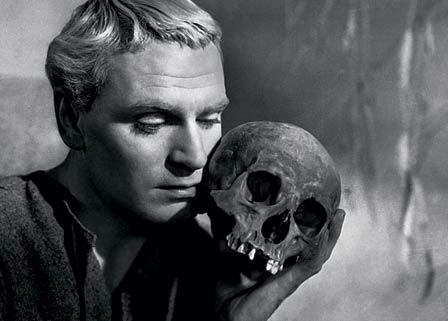
soliloquy: The act of speaking one's thoughts out loud, usually when alone. Used commonly in plays. 
To Be or Not to Be


speaker: Voice in a poem or narrator of a story.

stereotype: A widely held belief of a person/thing/group. Not necessarily true.


stream of consciousness: Technique that represents the thoughts and feelings of a character as they occur.

structure: The organization of a work of literature.

style: The distinctive way an author writes.

subordination: Words or phrases that are dependent on one another or something else.

surrealism: Literary and artistic movement characterized by the workings of the subconscious. Unrealistic. Juxtaposition of subject matter.

suspension of disbelief: Sacrifice of realism and logic for the sake of entertainment. 
symbol: AN object/idea used in a literary work to represent a deeper or bigger concept/topic.

synesthesia: "Hearing colors", "seeing sounds". Associating colors with words/numbers also acceptable.

synecdoche: Part referencing to a whole or vice versa.

syntax: The arrangement of words and phrases to create a certain sentence structure.
theme: Central topic a book/comic/movie/etc covers.

thesis: A proposition or statement set forward for consideration of the reader. Typically the main topic of the essay/book/etc.

tone: The author's attitude towards the subject they are writing about and towards their audience.

tongue in cheek: A statement that is said ironically. Meant to be humorous. 

tragedy: A play dealing with tragic events or having an unhappy ending. Usually deals with the downfall of the main character.

understatement: Statement that lacks emphasis.

vernacular: The common folk language. Colloquialism; the certain way people from certain regions/cultures talk. 

voice: Distinctive style or manner of expression of an author or a character.

zeitgeist: The "spirit" of the time; the taste and outlook characteristics of a period.